Education

.webp)
Quick summary
- EPD requirements vary significantly by market. Mandatory or project-specific EPD requirements now exist in several markets, including the EU, France, Malaysia (for selected iron and steel imports), and California (for specified materials in covered public works). Germany, Belgium, the Netherlands, Sweden, the UK, Canada, Australia, Japan, and Spain create strong EPD demand through building-level LCA, certification, and procurement requirements, even without a blanket legal mandate.
- EPDs are not interchangeable across borders. Different standards, programme operators, and databases apply by market. An EPD that satisfies EU CPR requirements may not satisfy US state procurement rules, and vice versa. Multi-market manufacturers need a clear view of which standards apply where.
- Procurement expectations are moving faster than legislation. LEED, BREEAM, Green Star, and public procurement tools like EC3 are making EPD absence commercially visible in markets where no law requires them. Waiting for mandatory requirements means losing bids before a regulation exists.
Environmental Product Declarations (EPDs) are becoming increasingly important in construction, but the nature of the requirement varies by market. In some cases, a qualifying EPD is mandatory. Elsewhere, building-level life cycle assessment rules, public procurement criteria and green building certifications create strong commercial demand without imposing a blanket product level requirement. That distinction is important because a mandatory building assessment does not necessarily mean every product needs an EPD, and an EPD accepted by one database or procurement authority may require additional checks before it can be used in another market.
The challenge for international manufacturers is that these requirements vary enormously by country. A manufacturer selling into France faces different rules than one selling into California, which faces different rules than one selling into the UK or Japan. An EPD that satisfies one market may not satisfy another.
This blog provides a market-by-market breakdown of where EPD requirements currently stand, what is driving them, and what businesses should be doing now.
What is an EPD?
An environmental product declaration (EPD) is a standardised, third-party verified document that reports a product's environmental impacts across defined lifecycle stages, from raw material extraction through to disposal. It is based on a lifecycle assessment (LCA) conducted according to product category rules (PCRs), and governed by ISO 14025. EPDs provide verified, standardised environmental data that can support comparison between products when the declarations use compatible rules, scopes, and assumptions – which is what regulators, certification schemes, and procurement teams need to evaluate a product's environmental performance.
Why EPD requirements are accelerating
Three forces are pushing EPD adoption from voluntary best practice towards a market-access requirement.
- Regulatory pressure. New and updated legislation is hardwiring environmental product data into procurement and market access across major markets. The EU's revised Construction Products Regulation (CPR, Regulation 2024/3110) and the Energy Performance of Buildings Directive (EPBD) are among the major regulatory drivers of product-level environmental data in construction. These are covered in more detail in the next section.
- Green building certification. BREEAM, LEED, and equivalent schemes incentivise or require EPDs, creating a de facto commercial demand in markets where regulation has not yet caught up. Specifiers on certification-tracked projects mean that products without EPDs may be less competitive.
- Procurement expectations. Public and private buyers are increasingly scoring bids on lifecycle environmental data, particularly in Northern Europe and North America. Tools such as the Embodied Carbon in Construction Calculator (EC3) are making EPD absence commercially visible even in markets with no legal mandate.
One practical consequence of this fragmentation is that EPDs are not interchangeable across borders - a point covered in more detail after the country breakdown below.
EPD requirements by country and region
European Union
Current status: Mandatory environmental performance disclosure (phased by product category)
Key framework: Construction Products Regulation (Regulation 2024/3110), EPBD
The revised Construction Products Regulation (CPR) was published on 18 December 2024, entered into force on 7 January 2025, and most provisions apply from 8 January 2026. It makes environmental sustainability data a mandatory component of the Declaration of Performance and Conformity (DoPC) for covered construction products. The DoPC replaces the Declaration of Performance under the previous 2011 CPR.
The CPR phases environmental sustainability information into the DoPC in three stages: the first group of environmental characteristics applies from 8 January 2026, a second group from 9 January 2030, and the full set of lifecycle indicators from 9 January 2032. The transition from the 2011 CPR will continue through 2032 as harmonised standards are updated category by category.
The Energy Performance of Buildings Directive (EPBD) requires lifecycle Global Warming Potential assessments on new buildings above 1,000 square metres by 2028, and on all new buildings by 2030, creating direct downstream demand for product-level EPD data.
EN 15804+A2 is the key European standard for construction-product EPDs and forms the basis for much of the EU's product-level environmental data framework. EPDs produced to the earlier A1 version are being phased out.
France
Current status: Mandatory building-level LCA; product-specific FDES strongly advantageous
Key framework: RE2020 regulation
Lifecycle carbon assessment on buildings became mandatory in France in January 2022 under the RE2020 regulation. For RE2020 calculations, environmental and health declarations for construction products – principally FDES, need to be available through the French system, with INIES as the reference database. A declaration produced under a foreign programme generally cannot be entered directly into INIES and must meet French programme and verification requirements first.
INIES is one of the largest EPD databases globally and is the dominant platform for EPD publishing in the French market. However, the database still has gaps in some product categories, meaning some products use state-provided average values as proxies. For international manufacturers targeting the French market, the number of approved verifiers is a practical bottleneck worth assessing early in the process.
Germany
Current status: Building-level requirements with strong market demand for EPDs
Key framework: IBU programme
Germany's Institut Bauen und Umwelt (IBU, the Institute for Construction and Environment) is one of the largest EPD programme operators in Europe, and IBU-registered EPDs are widely used and recognised across EU markets. Publicly funded buildings increasingly require lifecycle impact assessments, creating demand for verified EPDs. For manufacturers seeking broad EU market access, IBU is a commonly chosen programme operator.
Belgium
Current status: Mandatory when making environmental claims; otherwise procurement- and assessment-driven
Key framework: Royal Decree of 22 May 2014 on environmental claims
Belgium's approach is increasingly driven by building-level environmental performance requirements and public procurement, with regional and federal mechanisms rather than a single nationwide mandate. It was the Royal Decree of 22 May 2014 that started requiring a compliant, registered B-EPD when a manufacturer makes an environmental claim about a construction product. The B-EPD programme provides a Belgian route for publishing environmental product declarations, while EPDs from other recognised programmes - including INIES and IBU, may also be used depending on the project and assessment method. Manufacturers should check the specific database and methodology required for the project rather than assuming every EN 15804+A2 EPD is automatically accepted.
Netherlands
Current status: Mandatory at the building level
Key framework: Environmental Performance of Buildings (MPG), National Environmental Database (NMD)
The Netherlands is one of Europe's most advanced markets for embodied carbon assessment. Environmental performance calculations are mandatory for new residential buildings and many office developments through the Environmental Performance of Buildings (MPG) methodology, with requirements extended from 1 July 2026 to cover schools, shops, care institutions, and industrial buildings for the first time. Product-specific EPDs registered in the National Environmental Database (NMD) allow manufacturers to replace generic default values with verified product data, often improving environmental performance calculations and providing a competitive advantage during specification and procurement.
Although EPDs are not mandatory for every construction product, product-specific EPDs can give manufacturers a significant advantage because they allow project teams to use specific environmental data instead of generic datasets. EN 15804+A2 is the recognised standard, and EPDs must be accepted into the NMD to be used in official building assessments.
Spain
Current status: Market-driven under the EU framework
Key framework: GlobalEPD programme
Spain follows the EU Construction Products Regulation and applies EN 15804+A2 for construction product EPDs. While there are currently no Spain-specific mandatory product-level EPD requirements beyond EU legislation, demand continues to grow through public procurement, green building certification, and increasing use of whole-life carbon assessments in construction projects.
The GlobalEPD programme is Spain's national EPD programme operator and is recognised internationally through ECO Platform. For manufacturers supplying both the Spanish and wider European markets, GlobalEPD provides a route to publishing EN 15804-compliant declarations accepted across much of Europe.
Nordic countries (Sweden, Denmark, Finland, Norway)
Current status: Building-level LCA and climate reporting requirements
Key framework: National building regulations
Sweden launched the world's first EPD programme in 1998 and has remained a leader in EPD adoption ever since. Sweden requires a climate declaration for all new buildings coming to market from 2022. Denmark, Finland, and Norway have each introduced national measures requiring or supporting building-level climate or lifecycle assessments, creating demand for product-level environmental data such as EPDs. For manufacturers selling into Nordic construction markets, EPDs are effectively a commercial prerequisite regardless of whether a specific regulation mandates them at the product level.
United Kingdom
Current status: Market-driven
Key framework: BREEAM, UK Net Zero Carbon Buildings Standard (voluntary, launched March 2026), RICS Whole Life Carbon Assessment Professional Standard
EPDs are not legally mandatory in the UK as of mid-2026. The UK government rejected a recommendation from the Environmental Audit Committee to introduce mandatory whole-life carbon assessments for major developments, and no confirmed mandatory date exists in building regulations.
However, market-led adoption is significant. BREEAM credits, public procurement requirements, and growing specifier expectations mean that many manufacturers serving the UK construction market treat EPDs as effectively required for competitive bids. The UK Net Zero Carbon Buildings Standard, launched on 10 March 2026, is a voluntary industry framework that sets sector-specific performance thresholds for upfront embodied carbon and operational energy for projects that choose to apply it, and incorporates EPD data in its assessment methodology.
Several programme operators are active in the UK market. The International EPD System is one of the most widely used programme operators for UK EPDs. The BRE also operates a national EPD programme.
Australia and New Zealand
Current status: Market-driven
Key framework: Green Star (Green Building Council of Australia), IS Rating Scheme (Infrastructure Sustainability Council), Australian Government Environmentally Sustainable Procurement Policy
There is currently no national mandatory EPD requirement in Australia or New Zealand. EPD adoption is driven by green building certification schemes and procurement expectations rather than legislation.
EPD Australasia is the regional programme operator for both markets, operating as a regional partner of the International EPD System. Under Green Star's Responsible Products Framework, product-specific EPDs published through EPD Australasia now carry a Responsible Product Value (RPV) of seven, up from five – a separate mechanism from Green Star's project-level points, but one that counts towards meeting credit requirements in Green Star-rated projects. From 1 July 2024, the Australian Government's Environmentally Sustainable Procurement Policy has applied to Commonwealth construction-services procurements at or above AUD 7.5 million, with further product categories added from 1 July 2025. The policy requires environmental sustainability considerations and reporting but does not create a blanket EPD requirement, though verified declarations remain a practical asset in public tenders.
Japan
Current status: Emerging
Key framework: SuMPO EPD Japan
Japan does not have a mandatory EPD requirement for construction products as of mid-2026. SuMPO EPD Japan, formerly the Ecoleaf programme and operated by the Sustainable Management Promotion Organization (SuMPO), is Japan's main EPD programme, publishing declarations across multiple product categories. Green building certification under CASBEE incorporates LCA-related criteria but does not mandate EPDs at the product level.
For manufacturers exporting into Japan, EPDs produced under the International EPD System are recognised, but local market preference tends toward SuMPO EPD Japan-registered declarations.
Malaysia
Current status: Mandatory for imported iron and steel products; market-driven across the wider construction sector
Key framework: Ministry of Investment, Trade and Industry Certificate of Approval process, administered by SIRIM QAS International
Since 1 October 2025, importers of selected long iron and steel products have been required to submit an Environmental Product Declaration as part of Malaysia’s Certificate of Approval process. The affected categories include bars, cold-drawn bars, wire rods, and wire products.
Under the SIRIM requirements, the EPD must be verified by a third-party verifier or certification body in accordance with ISO 14025, published in English, and report Global Warming Potential using a cradle-to-gate system boundary.
Importers that were still obtaining an EPD were initially permitted to submit a transitional Letter of Undertaking. That arrangement ended on 30 June 2026. Importers that cannot provide the required EPD are now prohibited from importing the affected products, and non-compliant consignments arriving at a Malaysian entry point must be returned to their country of origin or another country.
Outside these specified imports, Malaysia does not currently impose a blanket EPD requirement across the construction-product market. Demand is instead being driven by green-building assessment and procurement expectations.
Canada
Current status: Mandatory embodied-carbon disclosure and reduction requirements for covered federal construction projects; otherwise market-driven
Key framework: Policy on Green Procurement, Greening Government Strategy, and Standard on Embodied Carbon in Construction
Canada does not currently impose a nationwide EPD requirement for construction products. However, the federal Standard on Embodied Carbon in Construction requires organisations covered by the Policy on Green Procurement to disclose and reduce embodied carbon in qualifying federal construction and renovation projects.
The material-specific requirements currently cover ready-mixed concrete and structural and reinforcement steel. For ready-mixed concrete, the requirements apply to qualifying projects where at least 100 cubic metres is used; the current project threshold is CAD 5 million. Steel requirements apply where eligible carbon and low-alloy steel products total at least 200 metric tonnes. Covered steel categories include reinforcing bar, structural sections, hollow structural sections, structural plate, steel joists and decking, cold-formed sections, merchant bar, and hot- and cold-rolled sheet, strip and plate.
Environmental impacts are generally substantiated using the highest-resolution qualifying EPD available. Where an EPD is not readily available, the Standard allows a qualifying independently reviewed LCA as an alternative. These requirements implement Canada’s broader Buy Clean approach, which uses federal procurement and infrastructure investment to increase demand for lower-carbon construction materials.
Beyond federal procurement, green building certification also creates demand for EPDs. LEED projects in Canada can earn credits for selecting qualifying products with environmental product declarations. The Canada Green Building Council's Zero Carbon Building Standard takes a different approach: it requires a whole-building life cycle assessment and compliance with embodied carbon limits. Although it does not award a specific product-level EPD credit, product-specific environmental data can support more accurate building assessments and help project teams demonstrate reductions.
ISO 21930 is a principal framework for construction-product EPDs in North America, with programme operators such as CSA Group and UL Solutions supporting EPD publication. It can provide a useful common starting point for manufacturers supplying Canada and the United States, although acceptance still depends on the applicable product category rules, programme, procurement authority and intended use.
What this means in practice: the fragmentation problem
Not all EPDs are interchangeable across borders. Countries use different programme operators, standards, and databases. An EPD developed under another programme may require additional steps to meet French verification and publication requirements before it can enter INIES. A US ISO 21930 EPD may need reworking for EU CPR compliance. For multi-market manufacturers or companies with complex global supply chains, understanding which EPD standards apply in which markets is increasingly part of procurement due diligence and supplier onboarding.
EN 15804+A2 has the broadest international acceptance as a baseline. ISO 21930 is widely used in North America. Many markets accept both. For manufacturers prioritising EU market access, EN 15804+A2 is an important starting point, though the applicable PCR, harmonised technical specification, and any national or project-specific requirements should also be checked.
What good practice looks like
- Map market exposure first. Identify which jurisdictions products or suppliers operate in and check current EPD requirements for those markets before starting the EPD process. Requirements vary by product category as well as by country.
- Prioritise high-impact product categories. Carbon-intensive materials such as steel, concrete, and insulation are among the product categories receiving early attention in several low-carbon procurement and building-policy regimes. Manufacturers or procurement teams working with these materials should treat EPD readiness as urgent.
- Do not wait for mandatory deadlines. Procurement expectations in LEED and BREEAM projects and public tenders are moving faster than legislation in many markets. Products without EPDs may be disadvantaged or excluded from carbon-conscious bids and tenders, even where no legislation mandates them.
- Verify and keep current. EPDs are typically valid for five years. They should be treated as living compliance data that needs renewing and updating when product formulations change, not as one-off certificates.
.webp)
How Zevero can help
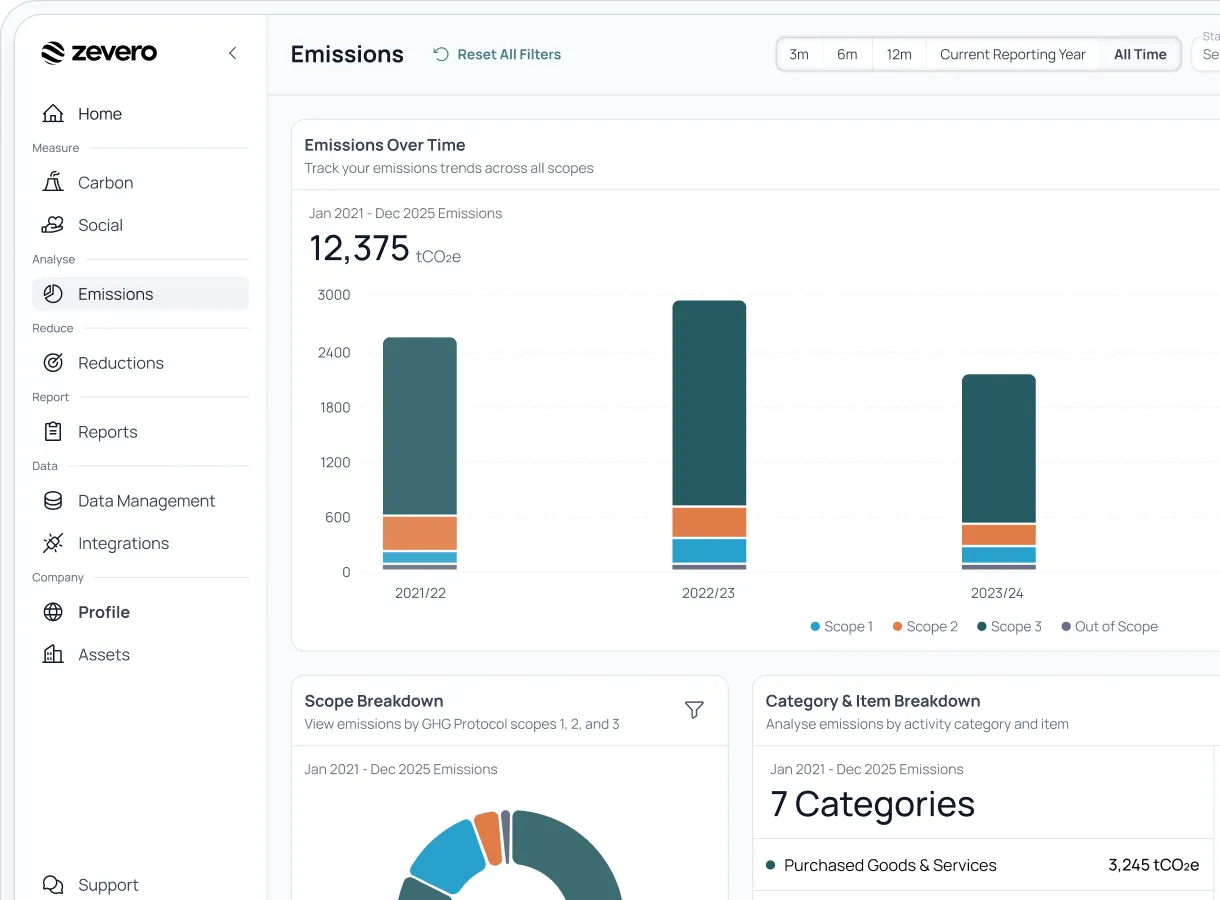
EPD readiness starts with product-level environmental data. Zevero's EPD platform helps companies produce third-party verified EPDs that meet the requirements of major market frameworks.
EPD requirements are not converging on a single global standard any time soon. The practical answer is knowing which markets matter, understanding which standards apply, and treating product-level environmental data as commercial infrastructure rather than a sustainability badge. Speak to the Zevero team to find out where to start.
FAQs
What is the difference between EN 15804 and ISO 21930?
How long does it take to produce an EPD?
Do EPDs need to be renewed?
Does an EPD prove a product is sustainable?
What happens if a supplier cannot provide an EPD?
Thanks for reading!
EPD Requirements by Country: A Guide for Manufacturers
Add us as a preferred source

Related posts

Read more

Blog
Jul 25, 2025
What is an EPD? A guide to Environmental Product Declarations
What is an EPD? A guide to Environmental Product Declarations
Read more
Blog
May 1, 2026
A Guide to the Energy Performance of Buildings Directive (EPBD)
A Guide to the Energy Performance of Buildings Directive (EPBD)

Read more
Blog
Dec 3, 2024
What Is a Life Cycle Assessment (LCA)? Stages, ISO Standards and Examples
What Is a Life Cycle Assessment (LCA)? Stages, ISO Standards and Examples
See how Zevero can streamline your carbon reporting
Grow your business and reduce your impact