
Who is Yakima Chief Hops?
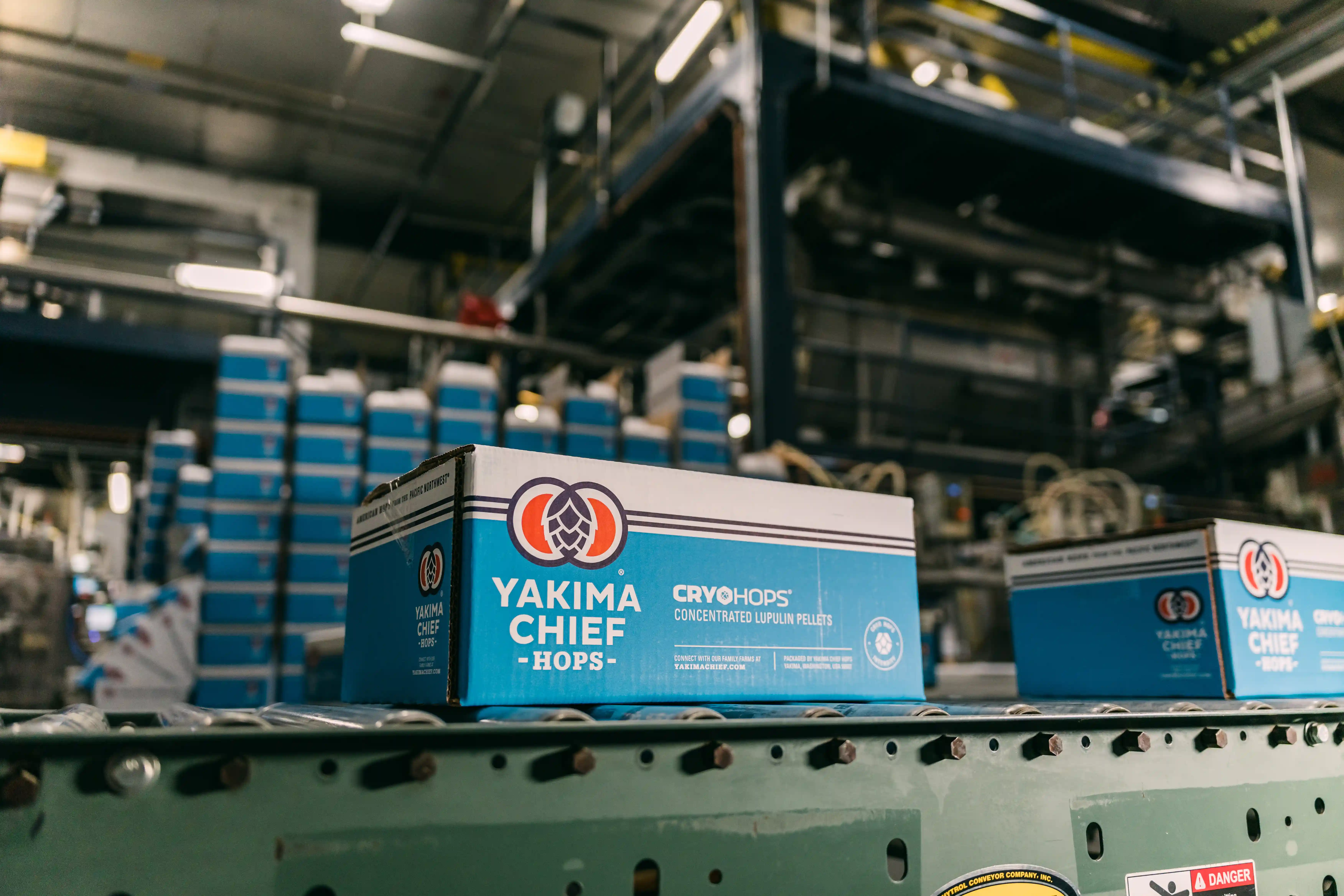
Yakima Chief Hops (YCH) is a 100% grower-owned global hop supplier that has operated for over 35 years, with roots in the Yakima Valley dating back to 1868. Its mission is to connect worldwide brewers with family hop farms in the Pacific Northwest, supplying whole hops, pellets, and advanced hop products from sites across North America and Belgium.
As a grower-owned business, the long-term health of the land is tied directly to the health of the business, and YCH strives to minimise impact, support community and environmental causes, and ensure the brewing industry thrives sustainably for future generations.
.jpeg)
The Challenge - managing growing data from spreadsheets
For YCH, sustainability isn’t just a corporate initiative; it’s a responsibility embedded in every aspect of their operations. However, as their business grew, so did the complexity of managing their environmental data. Outdated processes and siloed systems began to hinder their ability to track and measure their impact effectively.
Emissions data was scattered across multiple spreadsheets and managed largely by a single person. This made it difficult to track trends, measure progress accurately, or share insights across teams and stakeholders. With so much resting on manual effort, building a reliable picture of the footprint, let alone a plan to reduce it, was a real challenge.
The shape of YCH's footprint added to that challenge. The majority of their emissions sit in Scope 3, concentrated in the hops they purchase from their network of family farms. This data is difficult to gather and calculate, and it was not something spreadsheets could handle well.
At the same time, external pressures were mounting. Customers and regulators increasingly demanded verified, detailed data to demonstrate measurable progress. Meeting these expectations required not only robust data management but also the ability to provide transparent, credible reporting. YCH realised their existing approach was no longer sufficient to achieve their goals.
The Solution - building one reliable source of truth
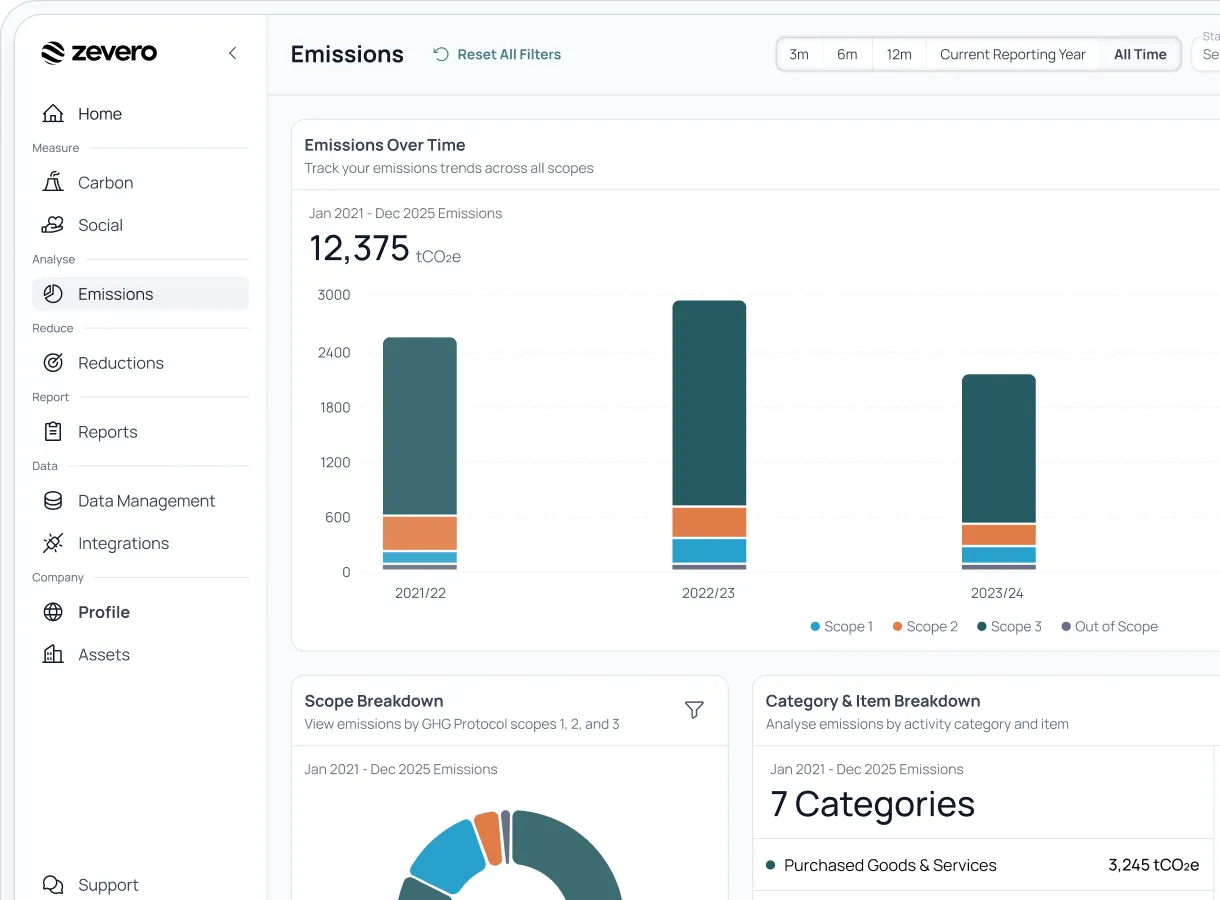
Partnering with Zevero, YCH replaced fragmented spreadsheets with a centralised system, bringing all its data together in one place. Automating processes such as emissions factor assignments reduced manual work, improved reporting accuracy, and freed the team to focus on strategic planning.
Now in their third year of partnership, YCH and Zevero have moved well beyond annual measurement. With three years of consistent data behind them, the focus has shifted from measuring emissions to acting on them: a decarbonisation roadmap now helps YCH prioritise where to focus, and forecasting tools help them understand where their efforts will have the greatest impact in the years ahead.
Their first Single Materiality Assessment fed directly into this planning. By engaging nearly 100 stakeholders, including employees, growers, customers, and community partners, YCH combined that feedback with its emissions data to build a decarbonisation strategy grounded in evidence and aligned with the priorities of the people they work with.
"Being involved with Zevero from the beginning has been incredibly valuable. As the platform has evolved, so have our sustainability efforts. We've gone from simply measuring our emissions to using the data to better understand where our impacts occur and where we have opportunities to improve."
The Results
Halved Scope 1 and 2 emissions against its 2020 target
YCH achieved the target it set in 2020 to halve emissions at its owned facilities. A key driver has been its ongoing shift to renewable electricity, sourced through Pacific Power's Blue Sky programme and generated directly through solar at several of its own facilities. Three years of consistent, like-for-like data is what lets YCH stand behind a result like this with confidence rather than estimation.
Reduced emissions intensity 6% while growing hop volumes 16%
In 2025, YCH grew hop volumes by 16% while reducing its overall emissions intensity by 6% vs 2024. With emissions from the hops themselves rising in line with volume, the improvement came from multiple places across the business: facility emissions fell 22% through lower natural gas use and fewer refrigerant leaks, business travel dropped 62%, and waste to landfill nearly halved. It shows that growth and decarbonisation can move in the same direction.
Built product carbon footprints across 425 products
Product carbon footprints are still relatively new territory in the hop industry. YCH has produced them across around 425 products to understand the impact at an individual product level. The work showed that while farm-level emissions are the largest contributor, format, processing, and packaging each shape a product's total impact. A key priority now is replacing assumptions with primary data from growers, which will sharpen the accuracy of each footprint over time. Brewing customers who requested this data are already feeding it into their own sustainability reporting.
To learn more about YCH's PCF work in the brewing industry, check out our on demand webinar here.
Turned emissions data into decisions across the business
YCH's first Single Materiality Assessment reinforced that sustainability is not something a business defines alone. The insights helped shape their long-term priorities and, combined with their emissions data, gave them a stronger foundation for decarbonisation planning.
Created one consistent dataset for multiple reporting frameworks
Three years of consistent data have made preparing for frameworks such as CSRD, CDP, and SBTi far more manageable, giving YCH one reliable source of truth rather than rebuilding datasets for each disclosure.
"Consistent data is what gives sustainability work credibility. It's difficult to demonstrate meaningful progress without measuring the same way year after year. Having three years of structured emissions data allows us to compare performance over time, understand which initiatives are making a difference, and communicate those results with confidence.”
Looking Ahead
With their decarbonisation strategy in place, YCH's focus is shifting to execution: acting on their reduction initiatives, extending product footprints across more of their range, and working closely with the growers, suppliers, and logistics partners who shape the largest part of their footprint. Their 2030 goals include a 20% reduction in Scope 3 emissions across key categories and publishing product carbon footprint data across their full portfolio.
To go further on Scope 3, YCH has begun introducing their own supply chain partners to Zevero, extending the same approach beyond its own operations.
"We see Zevero as an important technical partner that helps us organise increasingly complex emissions data while giving us the tools to identify where reductions are possible. We know our business, and Zevero knows climate data. Combining those two makes for a dynamic duo.”