Left-facing arrow icon in white color, commonly used for navigation or forward actions.
すべての投稿

The EU Taxonomy: A Practical Guide for Companies Navigating Sustainability Reporting

基礎知識
Jasmine Saini
Jasmine Saini
上級カーボンコンサルタント
The EU Taxonomy: A Practical Guide for Companies Navigating Sustainability Reporting

Quick summary

  1. The EU Taxonomy classifies economic activities, not companies. Companies must assess which of their activities are eligible and aligned, and disclose the proportion of their turnover, CapEx, and OpEx that qualifies.
  2. Following the Omnibus Directive, mandatory reporting applies to companies with more than 1,000 employees and net annual turnover above €450 million. Companies below those thresholds can still report voluntarily.
  3. EU Taxonomy disclosures are made as part of the CSRD report, not separately. Companies working on CSRD need to integrate Taxonomy assessment into the same process.

The sustainable finance space has a language problem. "Green", "sustainable", and "environmentally responsible" can mean almost anything, and that ambiguity creates real risk: for investors trying to allocate capital to genuine sustainable activities, for companies trying to make credible claims, and for regulators trying to hold both accountable.

The EU Taxonomy exists to fix that. It is a classification framework that provides a shared, legally defined answer to the question: what actually counts as environmentally sustainable? Rather than relying on company-defined claims, it sets technical criteria against which economic activities can be assessed. If an activity meets those criteria, it qualifies as environmentally sustainable under EU law. If it does not qualify, it does not, regardless of how the activity is described.

What is the EU Taxonomy?

The EU Taxonomy is a classification system that defines which economic activities can be considered environmentally sustainable under EU law. It was adopted as part of the EU's Sustainable Finance Action Plan and the Taxonomy Regulation entered into force on 12 July 2020. When it launched, the Taxonomy only covered two environmental objectives: climate change mitigation and adaptation. Technical screening criteria for those two objectives applied from 2022. The remaining four objectives, covering water, circular economy, pollution, and biodiversity, were added in 2024, bringing the framework to its current six-objective scope.

One important distinction to make clear from the outset: the Taxonomy does not classify companies as sustainable or unsustainable. It classifies economic activities. A company may have some activities that qualify as Taxonomy-aligned and others that do not, and that is expected.

What companies are required to do is assess which of their activities fall within the scope of the Taxonomy's delegated acts. Delegated acts are the binding legal instruments the European Commission uses to set the detailed requirements for each activity and objective. For activities that are covered, companies must assess whether they meet the criteria for alignment, and then disclose what proportion of their revenue, capital expenditure (CapEx), and operating expenditure (OpEx) qualifies.

The six environmental objectives

Every activity assessed under the EU Taxonomy must substantially contribute to at least one of the following six environmental objectives, without significantly harming any of the others:

  1. Climate change mitigation – reducing or avoiding greenhouse gas emissions
  2. Climate change adaptation – reducing vulnerability to the current and expected impacts of climate change
  3. Sustainable use and protection of water and marine resources – protecting water bodies and marine ecosystems
  4. Transition to a circular economy – reducing waste, increasing reuse and recycling, and designing out materials that cannot be recovered
  5. Pollution prevention and control – reducing pollution of air, water, and land
  6. Protection and restoration of biodiversity and ecosystems – conserving habitats, species, and ecosystem services

What makes an activity Taxonomy-aligned?

For an economic activity to be considered EU Taxonomy-aligned, it must satisfy all four of the following conditions:

  • Substantial contribution. The activity must meaningfully advance at least one of the six environmental objectives, measured against specific technical thresholds set out in delegated acts.
  • Do No Significant Harm (DNSH). The activity must not cause significant harm to any of the other five environmental objectives. For example, an activity that contributes to climate change mitigation but causes significant harm to biodiversity does not qualify.
  • Minimum safeguards. The activity must be carried out in compliance with baseline social and governance standards, aligned with the OECD Guidelines for Multinational Enterprises and the UN Guiding Principles on Business and Human Rights.
  • Technical screening criteria. The activity must meet the specific performance thresholds set out in the relevant delegated act for that activity and objective.

Before assessing alignment, companies need to understand the difference between two terms. An activity is Taxonomy-eligible if it is covered by the framework, meaning a delegated act exists for that type of activity. It is Taxonomy-aligned only if it meets all four criteria above. Eligibility comes first, alignment comes second.

Who needs to report, and what must they disclose?

Following the Omnibus Directive, mandatory EU Taxonomy reporting now applies to companies with more than 1,000 employees and net annual turnover above €450 million. Companies below those thresholds can still report voluntarily.

Companies in scope must disclose three key performance indicators (KPIs):

  • Turnover KPI: the share of total revenue from Taxonomy-aligned activities
  • CapEx KPI: the share of capital expenditure associated with Taxonomy-aligned activities
  • OpEx KPI: the share of operating expenditure associated with Taxonomy-aligned activities

For each KPI, companies must report both the eligible proportion and the aligned proportion. These disclosures are made within the environmental section of the Corporate Sustainability Reporting Directive (CSRD) sustainability report rather than as a separate filing.

Companies may now exclude economic activities from Taxonomy assessment where they represent less than 10% of total turnover, CapEx, or OpEx for each KPI. Activities at or above the 10% threshold must still be assessed and reported. This allows companies to report on significant activities even where full alignment data is not available across the entire activity.

What changed with the Omnibus simplification

The Omnibus Directive was formally approved on 24 February 2026 and entered into force on 18 March 2026. It introduced several significant changes to how the EU Taxonomy operates in practice:

  • Scope narrowed. The CSRD thresholds now apply to companies with more than 1,000 employees and above €450 million net annual turnover. Since EU Taxonomy disclosures are made as part of the CSRD report, the same thresholds apply. Companies previously in scope under earlier CSRD thresholds but falling below 1,000 employees are no longer required to report.
  • Simplified reporting templates. The Omnibus introduced simplified Taxonomy reporting templates that significantly reduce the number of required data points compared to the original framework. Companies may use either the new simplified templates or the original templates for financial years ending in 2026, providing more time to prepare before the new requirements take full effect.
  • Voluntary reporting. For out-of-scope companies, voluntary reporting under the same framework remains an option, particularly where investors or customers are asking about Taxonomy alignment.
  • Better alignment with CSRD and ESRS. The Omnibus improves the structural alignment between EU Taxonomy disclosures and the European Sustainability Reporting Standards (ESRS), reducing duplication of effort for companies working on their CSRD report.

How the EU Taxonomy connects to CSRD

EU Taxonomy disclosures are not a separate workstream from CSRD. They are reported as part of it, specifically within the environmental section of the CSRD sustainability report. Companies preparing their first CSRD report need to account for Taxonomy obligations as part of the same process, not separately.

The data collection and assessment work required for Taxonomy alignment feeds directly into CSRD disclosures. Companies that treat these as separate exercises will duplicate effort. For companies also subject to the Ecodesign for Sustainable Products Regulation (ESPR), the product-level environmental data that ESPR requires, covering lifecycle impacts, material composition, and supply chain emissions, draws on much of the same underlying data that feeds both Taxonomy assessments and CSRD disclosures for manufacturing activities.

Getting started with the EU Taxonomy

Whether a company is currently in scope or expects to be in scope as requirements evolve, three steps are worth taking now:

  • Identify which economic activities are Taxonomy-eligible. Review the delegated acts for the six environmental objectives and map the economic activities against them. Not all activities will be covered, and establishing what is and is not eligible is the essential first step before an alignment assessment can begin.
  • Assess alignment against the technical screening criteria. For eligible activities, work through the four criteria: substantial contribution, DNSH, minimum safeguards, and technical screening criteria. The most technically demanding step is usually demonstrating compliance with the specific performance thresholds set out in the relevant delegated act, which vary significantly by sector and activity type.
  • Build Taxonomy assessment into CSRD data collection cycle from the outset. Running them separately creates duplication that is difficult to undo once reporting is underway.

If a company is not yet in scope, voluntary disclosure is worth considering, particularly if investors, lenders, or customers are already asking about Taxonomy alignment.

How Zevero can help

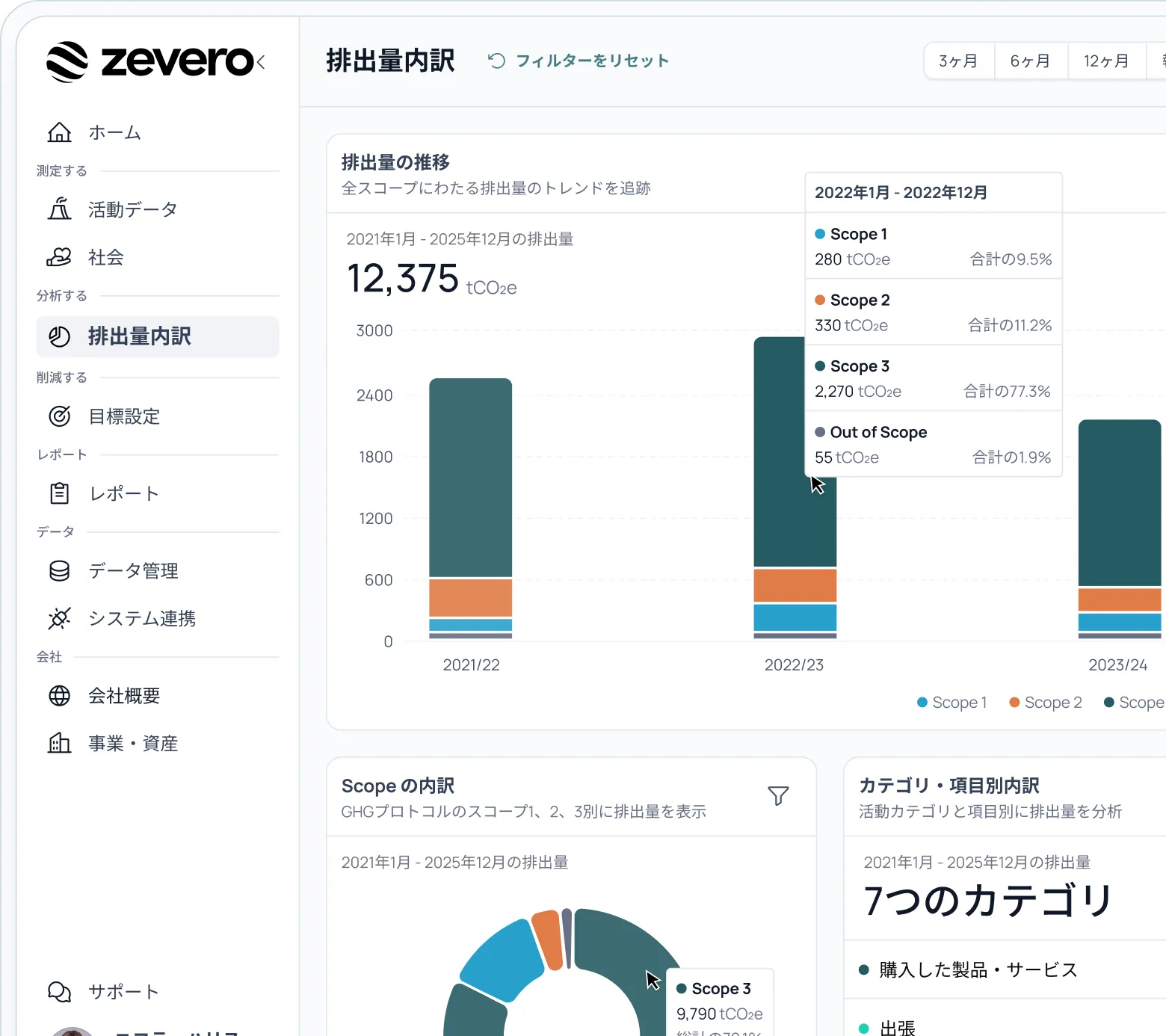
EU Taxonomy disclosures are made as part of the CSRD report, and the underlying data needs to be structured, traceable, and audit-ready. Zevero's AI-Powered ESG Reporting tool converts existing documents into ESG reports aligned with global frameworks including CSRD.

For companies working through their first EU Taxonomy assessment or mapping activities against the delegated acts, speak to the Zevero team to find out how we can help.

FAQs

Does the EU Taxonomy apply to non-EU companies?
What sectors are covered by the EU Taxonomy?
What is the difference between the EU Taxonomy and the EU Green Bond Standard?
How does the EU Taxonomy interact with science-based targets?

お読みいただきありがとうございます。

The EU Taxonomy: A Practical Guide for Companies Navigating Sustainability Reporting
ニュース提供元としてご追加下さい。

Zeveroがどのように報告作業を効率化できるか、ご紹介します。

Grow your business and reduce your impact
Zevero dashboard image.