Education

.webp)
Quick summary
- Many CSR training programmes are ineffective because they focus on building awareness, not capability.
- Effective CSR training is tailored by role or department, regularly reinforced, and grounded in real data. It should connect sustainability to the work employees are responsible for.
Sustainability commitments are multiplying. Regulation, investor pressure, and supply chain requirements are all pushing companies to set targets, measure emissions, and disclose performance. But the people expected to deliver on those commitments, across procurement, finance, and operations, often lack the grounding to do so.
Most corporate social responsibility (CSR) training addresses this gap too superficially to make a difference. A one-hour annual module treated as a tick-box exercise does not change how anyone makes a decision. A well-designed programme builds genuine understanding and connects it to the decisions employees make every day.
What CSR training is, and what it is not
CSR training is the process of building employee understanding of a company's environmental, social, and governance responsibilities, and the role individual employees play in meeting them.
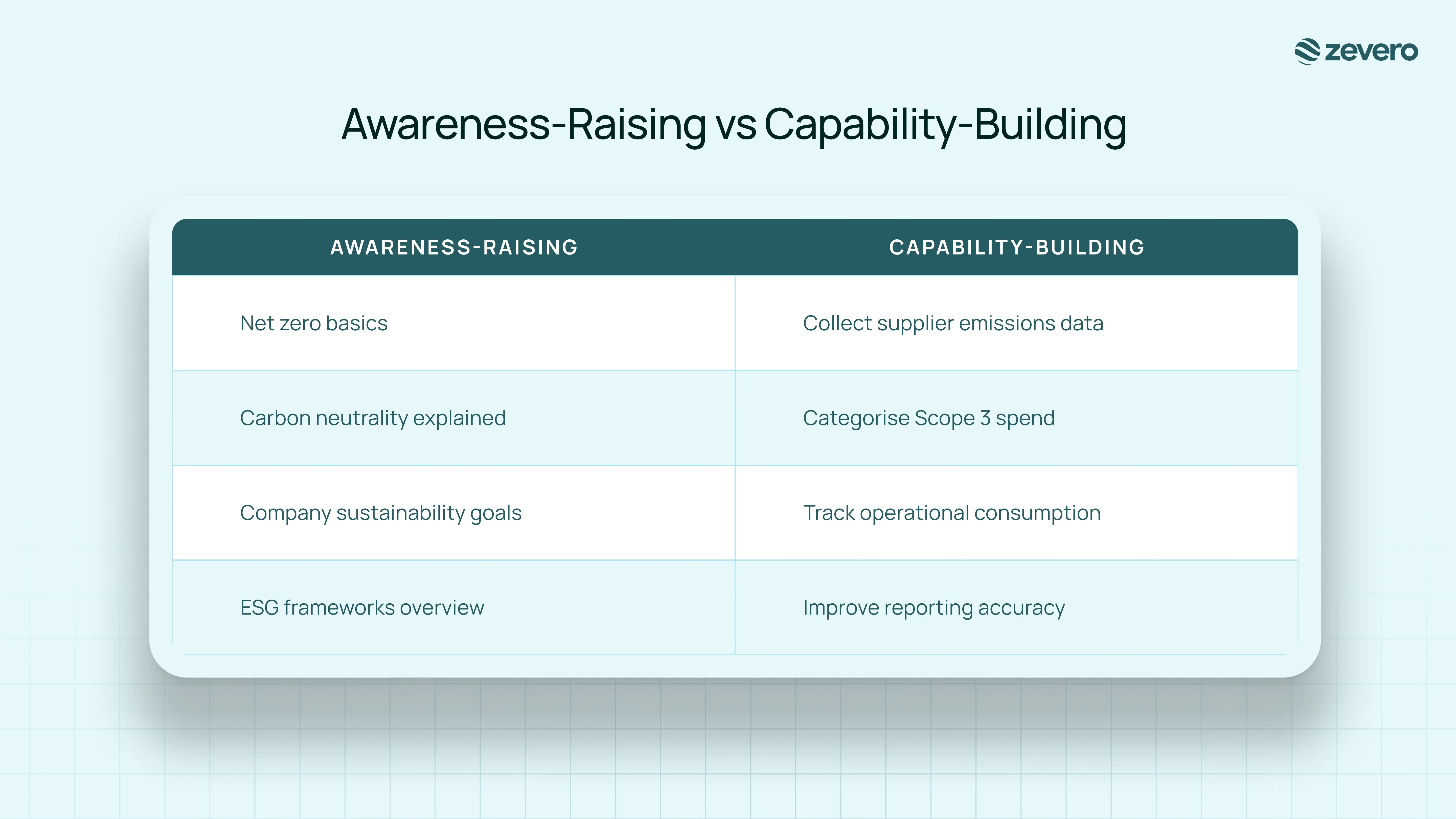
There are two levels within CSR training:
- Awareness-raising introduces concepts: what net zero means, why the company has made certain commitments, what sustainability terms mean. This is a useful starting point but it stops short of changing behaviour.
- Capability-building equips employees to act differently in their specific role, whether that means a procurement manager requesting emissions data from suppliers or a finance analyst categorising spend for Scope 3 reporting.
The common failure mode is stopping at awareness. A single annual module delivered to all staff, identical regardless of role, generates completion certificates but rarely changes behaviour. Employees treat it as compliance, not capability. Effective training changes what people do, not just what they know.
Why CSR training matters now
Sustainability used to sit with a small team of specialists, but that has been starting to change. Embedding sustainability knowledge across the organisation is shifting from a nice-to-have into a core operational requirement, and companies that treat it as optional are increasingly exposed.
Regulation requires embedded sustainability
Frameworks underlying key regulations, such as the European Sustainability Reporting Standards (ESRS) require companies to demonstrate that sustainability is managed across the organisation, not confined to a single team. For example, ESRS S1, the "Own Workforce" standard, specifically covers training and skills development as part of workforce reporting. Sustainability capability is becoming something companies must be able to evidence, not just assert.
Employee expectations are shifting
Employees, particularly younger generations, increasingly expect their employers to take sustainability seriously and to give them a meaningful role in it. Deloitte's 2025 survey found that 70% of Gen Z and millennials consider environmental sustainability important when choosing an employer, and nearly nine in ten say purpose is important to their job satisfaction.Training that treats sustainability as a genuine capability rather than a compliance formality supports engagement and retention.
Carbon data quality depends on it
Accurate Scope 1, 2, and 3 reporting depends on people across the business following the right processes: procurement teams sourcing and recording supplier data in the right format, finance teams understanding emissions accounting, operations teams tracking consumption accurately. None of that happens reliably unless the people involved understand why the data matters and how to handle it.
What effective CSR training covers
The right content for any CSR training programme depends on who is being trained and what decisions they make. That said, four areas come up consistently across functions and sectors, and most companies will need to address all four to some degree, even if the depth and framing differs by role:
Carbon literacy
Employees need to understand what emissions data is, why it is collected, and how their role contributes to it. Good carbon literacy training means a warehouse manager understands why energy consumption is logged, and a category buyer understands why supplier emissions data is requested. The test is whether employees can connect their daily decisions to the company's emissions profile.
ESG frameworks and reporting
For employees involved in disclosure or data collection, training should cover the frameworks the company reports against and what they require. A finance analyst contributing to a CSRD disclosure needs to understand what the ESRS expects and why accuracy and traceability matter.
Scope 3 and supply chain
For procurement and supplier management teams, Scope 3 is usually the largest and hardest part of the carbon footprint. Training should cover how supplier choices affect emissions, how to request and assess supplier data, and how procurement decisions feed the company's reported footprint.
Governance and responsibility
Employees should understand who owns what, how sustainability decisions are escalated, and what the company's own targets and commitments actually are. Sustainability targets that employees cannot articulate are targets that employees are not actively working toward.
How to design a programme that works
Designing a CSR training programme that changes behaviour requires content that is relevant, timely, and connected to how employees actually work. The following five steps cover how to build it:
- Start with a gap assessment. Identify which teams are most exposed to sustainability obligations, often procurement, finance, and facilities, and assess what they currently understand. This tells you where capability-building will have the most impact, rather than distributing effort equally across teams where the need varies significantly.
- Role-tailored content. A single all-staff module rarely lands because it is relevant to no one in particular. Differentiate by function and seniority. What a procurement lead needs to know is different from what a board member or a facilities technician needs.
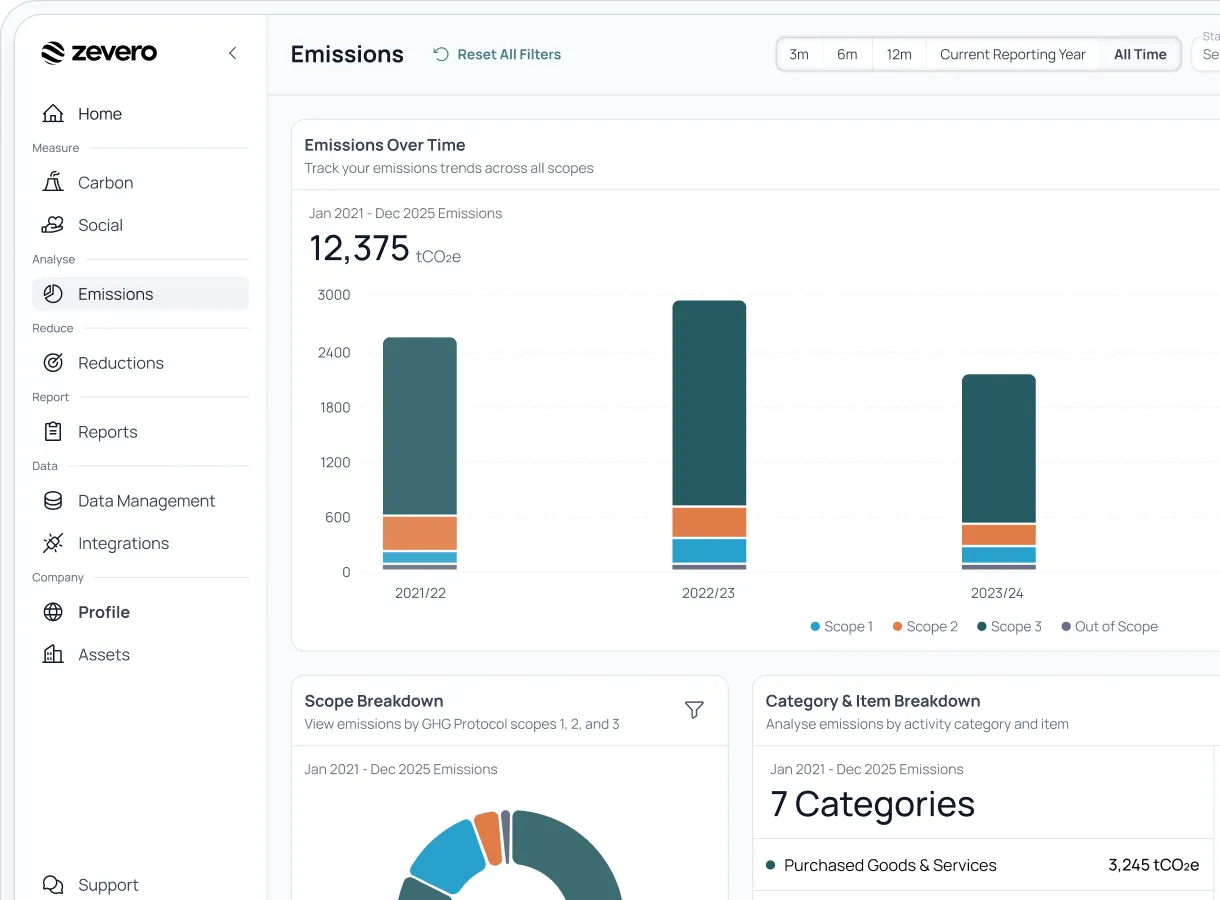
- Use internal data to make it real. If the company has already measured its corporate carbon footprint, use the actual emissions profile to illustrate the training. Real numbers from the business land far more effectively than abstract examples. Showing a procurement team that their purchasing decisions account for the largest share of the company's carbon footprint changes how seriously they engage with the data.
- Build in reinforcement. Annual training does not stick. Regulatory context shifts, people change roles, and one-off sessions fade. Consider quarterly updates tied to reporting cycles or regulatory developments, so training stays live rather than becoming a yearly event.
- Link to systems and tools. Training is more durable when employees know how to act on it immediately. Connecting training to the actual tools employees use, whether that is the procurement system, the data collection workflow, or the reporting platform, turns knowledge into action.

Building capability that lasts
CSR training works when it is specific, role-relevant, and connected to the company's actual data and commitments. The underlying point is simple: sustainability performance depends on people across the business understanding what they specifically contribute to it. For companies that have already measured their carbon footprint, the data itself is the best teaching tool available.
For companies looking to connect their emissions data to a stronger internal capability programme, speak to the Zevero team to find out how we can help.
FAQs
Who should be responsible for CSR training: HR or the sustainability team?
How do you measure whether CSR training is actually working?
What is carbon literacy and how is it different from general sustainability awareness?
Does CSR training need to be different for companies not subject to CSRD?
Can small companies build effective CSR training without a dedicated budget?
Thanks for reading!
How to Build CSR Training That Actually Changes Behaviour
Add us as a preferred source

Related posts

Read more

Blog
Apr 22, 2025
Beyond the Badge: What the New B Corp Standards Mean for Purpose-Led Businesses
Beyond the Badge: What the New B Corp Standards Mean for Purpose-Led Businesses

Read more
Blog
Jul 24, 2025
How AI Helps Sustainability Teams Turn Emissions Data Into Action
How AI Helps Sustainability Teams Turn Emissions Data Into Action

Read more
Blog
Apr 26, 2024
How Can We Make Our Office More Sustainable
How Can We Make Our Office More Sustainable
See how Zevero can streamline your carbon reporting
Grow your business and reduce your impact