Education

Quick summary
- There is no single correct method for measuring carbon emissions. Spend-based, activity-based, and hybrid approaches each have their place, and the right choice depends on data availability, resources, and how precise the results need to be.
- Spend-based is the fastest way to get a baseline for Scope 3 purchased goods and services, but it cannot be used for Scope 1 or Scope 2.
- Carbon accounting is iterative and accuracy should improve over time. As data infrastructure develops, companies move progressively from spend-based toward activity-based approaches
Most companies reach a point where they know carbon measurement needs to happen. What trips them up is not the commitment, it is figuring out where to actually start. There is no single correct method, and that is not a problem. The right approach depends on what data is available, how much internal resource can be committed, and how precise the results need to be.
Carbon accounting can feel technical from the outside, but the core concept is straightforward: a company collects data about its business activities, applies an emissions factor to that data, and arrives at a carbon figure. The three methods differ in the type of data they use, and each involves trade-offs between speed, cost, and accuracy.
What carbon accounting actually covers
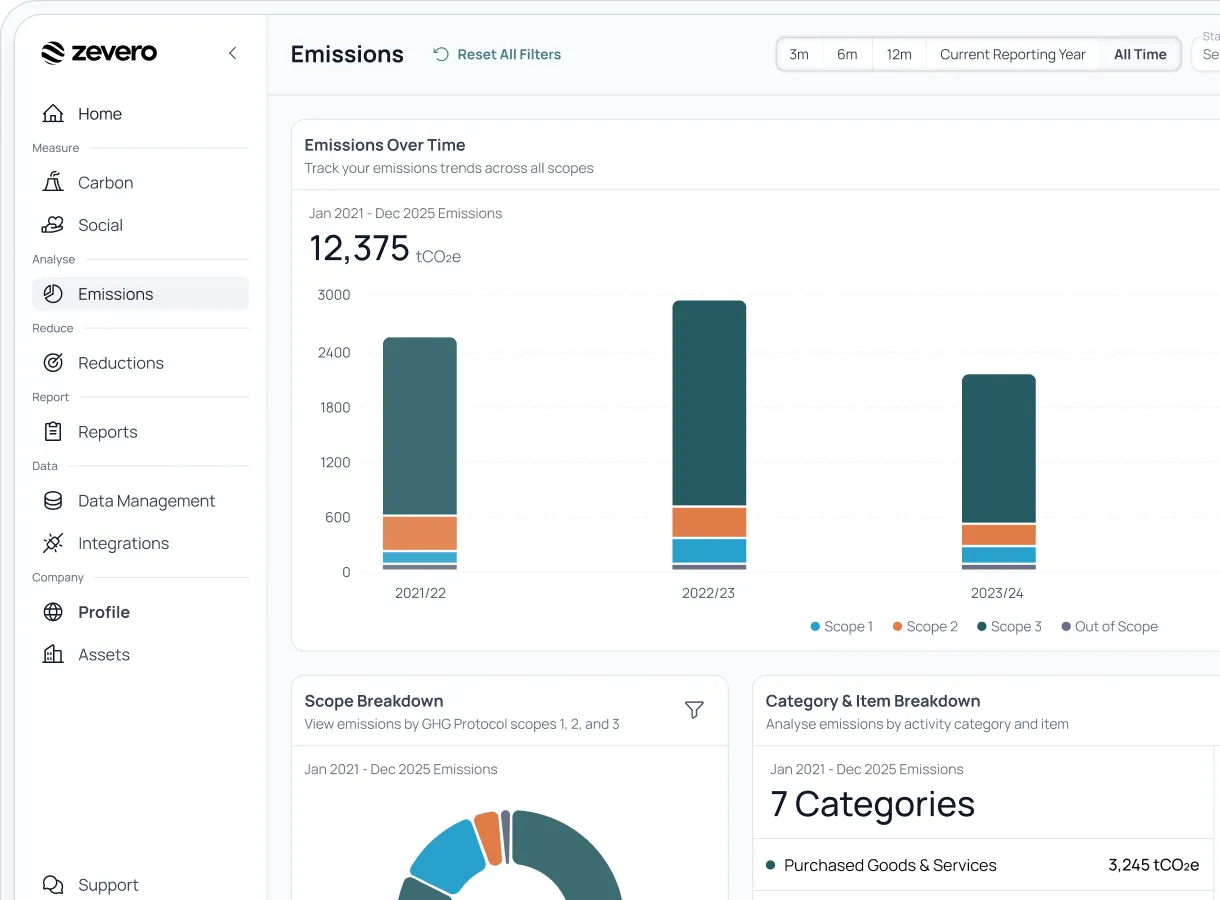
Carbon accounting is the process of measuring the greenhouse gas (GHG) emissions a company is responsible for. Emissions are organised into three scopes under the GHG Protocol, the most widely used global standard for corporate carbon measurement:
- Scope 1: Direct emissions from sources owned or controlled by the company, such as fuel burned in company vehicles or on-site boilers
- Scope 2: Indirect emissions from purchased electricity, heat, or steam
- Scope 3: All other indirect emissions across the value chain, including purchased goods and services, business travel, employee commuting, and the use of sold products
Scope 3 is typically the largest and hardest to measure, and it is where the choice of method matters most.
The three methods of measurement in carbon accounting
Spend-based
What it is: A method that estimates emissions by multiplying the amount of money spent in a category by an emissions factor expressed per unit of currency.
How it works: If a company spent £50,000 on freight services in a year, it multiplied that spend by the emissions factor for the freight spend category, expressed in kilograms of CO₂e per pound spent. The result is an estimated emissions figure for that category. The emissions factors used are derived from economic input-output models that represent the average carbon intensity of spending across sectors.
Best used when: A company is measuring for the first time and does not yet have detailed operational data. Spend-based is fast, requires no supplier engagement, and can be run from financial data most companies already have. It is accepted under the GHG Protocol and is particularly useful for getting a broad picture of Scope 3 emissions quickly.
Limitations: Spend-based cannot be used for Scope 1 or Scope 2, where activity-based data is required. For Scope 3, it provides an estimate rather than a precise figure. Because it uses average sector-wide emissions factors rather than data specific to individual suppliers or products, it cannot distinguish between a low-carbon supplier and a high-carbon one in the same category. It is also sensitive to price changes. If a category's costs rise due to inflation rather than increased activity, the emissions estimate will rise even if actual emissions have not.
Activity-based
What it is: A method that calculates emissions using actual physical activity data, such as litres of fuel consumed, kilowatt-hours of electricity used, or kilometres travelled, multiplied by an emissions factor specific to that activity.
How it works: If a company's fleet consumes 10,000 litres of diesel in a year, it multiplies that volume by the emissions factor for diesel combustion, expressed in kilograms of CO₂e per litre. The result is a precise figure based on what actually happened, not an estimate based on spend.
Best used when: A company needs defensible, auditable emissions data. Activity-based is the required approach for Scope 1 and Scope 2, and is the preferred method for material Scope 3 categories where data is available. It is essential for companies with regulatory disclosure obligations such as the Corporate Sustainability Reporting Directive (CSRD), where data quality and traceability will be subject to external assurance.
Limitations: Activity-based data is more time-consuming and resource-intensive to collect, particularly for Scope 3 categories that involve supplier engagement. Not all suppliers will have the data or the willingness to provide it. For companies with large, complex supply chains, collecting activity-based data across all Scope 3 categories is typically not feasible in the first measurement cycle.
Hybrid
What it is: A combination of spend-based and activity-based methods, using activity-based data where it is available and spend-based estimates to fill the gaps.
How it works: A company might calculate its Scope 1 and Scope 2 emissions using activity-based data, then calculate Scope 3 Category 1 (purchased goods) using activity-based data for its top ten suppliers and spend-based estimates for the rest. The result is a more accurate picture than spend-based alone, without requiring complete activity data across every category.
Best used when: A company has done a first measurement and wants to improve accuracy progressively. It is also the recommended approach under the GHG Protocol for companies that have some activity data but cannot collect it comprehensively across the full value chain. Most companies that measure their emissions regularly use a hybrid approach in practice.
Limitations: Managing two data types adds complexity, and the overall accuracy of the result depends on how material the spend-based portions are. If the highest-emission categories are still being estimated by spend, the hybrid approach may not improve accuracy where it matters most.

How to choose the right approach
Selecting the best method for measuring your carbon footprint depends on several factors, and is specific to each organisation. Here are a few example scenarios showing how different situations result in the use of different approaches:
Scenario 1: "We have never measured before and do not have much internal resource"
Start with spend-based for Scope 3. It can be run from financial data the company already has, requires no supplier engagement, and will give the company a broad picture quickly. The goal is to establish a baseline and understand which categories are most material, so the business can decide where to invest in better data. Treat the first measurement as a diagnostic exercise, not a final answer.
Scenario 2: "We are in scope for CSRD and need defensible data"
Activity-based is required for Scope 1 and Scope 2. For Scope 3, a hybrid approach works best: prioritise activity-based data for the categories that are most material to the company's footprint, and use spend-based estimates for lower-priority categories while supplier data capability is being built. The Scope 3 methodology should be documented and auditable, because external assurance requirements apply once disclosure obligations are in force.
Scenario 3: "We have done a first measurement and want to improve accuracy"
Move to a hybrid approach with a roadmap. Identify which Scope 3 categories contribute most to the company's total footprint and prioritise those for activity-based data collection first. Supplier engagement, procurement data requests, and Environmental Product Declaration (EPD) requirements for key materials are all levers for improving accuracy over time. Accuracy improves category by category, not all at once.
Accuracy improves over time
Carbon accounting is not a one-time exercise. Companies typically start broad and get more precise as they build better data infrastructure, engage their supply chains, and develop internal capability. The method a company starts with is not the one it is committed to.
The GHG Protocol recommends a data quality improvement plan as part of ongoing carbon accounting practice. This iterative approach to data quality is a core expectation of frameworks such as the SBTi Corporate Net-Zero Standard V2.0, which requires companies to demonstrate ongoing improvement in emissions measurement and reporting, not just a one-time baseline calculation. In practical terms, this means tracking which categories are still on spend-based estimates and building a timeline for moving the most material ones to activity-based data. Each improvement cycle makes the footprint more accurate and more defensible.

Getting started matters more than getting it perfect from the outset. A first measurement gives a baseline to work from and a clear picture of where to focus next.
How Zevero can help
Zevero's expert-led carbon managementt platform is built to support companies at every stage of this journey, from a first spend-based measurement through to granular activity-based Scope 3 reporting. The platform matches business data against over 200,000 emissions factors using AI, reducing the manual effort of moving from spend-based to activity-based calculations as data quality improves.
Speak to the Zevero team to find out where to start.
FAQs
Is spend-based measurement good enough for regulatory reporting?
How do emissions factors work and where do they come from?
How long does a first carbon measurement take?
What is the difference between a carbon footprint and a carbon inventory?
Can a company change its measurement method from year to year?

Related posts

Read more

Blog
Jul 25, 2025
What is an EPD? A guide to Environmental Product Declarations
What is an EPD? A guide to Environmental Product Declarations

Read more
Blog
Feb 21, 2025
Spend-Based vs. Activity-Based Emissions: Understanding the Key Differences
Spend-Based vs. Activity-Based Emissions: Understanding the Key Differences

Read more
Blog
Feb 12, 2025
What is CSRD? How the Corporate Sustainability Reporting Directive Impacts Businesses Worldwide
What is CSRD? How the Corporate Sustainability Reporting Directive Impacts Businesses Worldwide
See how Zevero can streamline your carbon reporting
Grow your business and reduce your impact